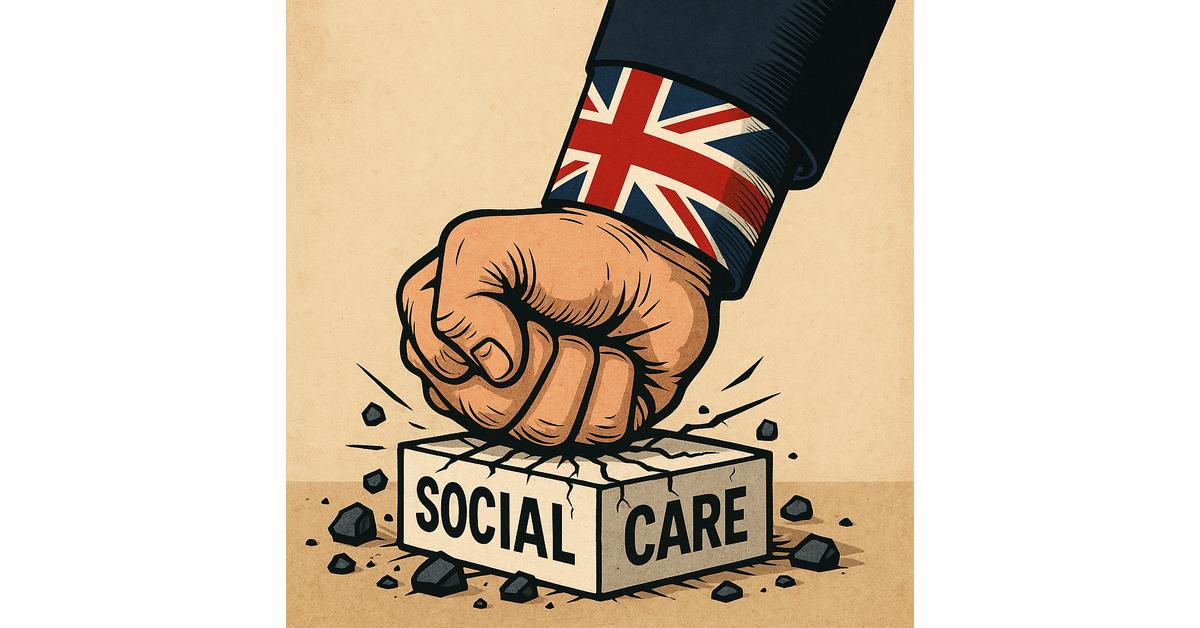
Recent National Insurance hikes have driven up business costs significantly. For many providers, this has meant a 10 percent increase in staffing costs almost overnight. There has been no corresponding uplift in the rates paid by local authorities or ICBs.
So while the cost of running a care service rises, the income stays the same. Providers are expected to absorb the impact. Again.
This is not just an oversight. It is the continuation of a pattern. A pattern of decisions that pile pressure onto small and mid-sized care providers, all under the label of “reform.”
Sponsorship Under Fire
The latest blow is the tightening of rules around international recruitment. On the surface, it is about protecting UK jobs. But the logic does not hold.
If there were enough people in the UK willing and available to work in care, we would not have a workforce crisis. We would not be on the occupational shortage list.
This change is not about protection. It is about cost control. By restricting access to international care workers, the government limits staffing supply. Large organisations with bigger budgets and infrastructure can cope. Small, values-led providers cannot.
Those trying to run fair, ethical businesses are left behind. Recruitment becomes harder. Compliance gets heavier. Fees stay frozen.
Managed Decline, Disguised as Reform
This does not feel like a broken system anymore. It feels like a system being broken on purpose.
Small and mid-sized operators are being squeezed out. What remains is a streamlined sector built around volume, not quality. Big providers delivering care just good enough to pass inspection. Nothing more.
Efficiency is now more important than humanity. Quantity is replacing quality. We have seen this happen in other industries and other countries. It looks like social care in the UK is heading the same way.
Political Choices, Long-Term Consequences
This was never just about social care. For years, governments made bold promises about pensions, the NHS, education, and care without building the financial base to support them.
Now, with costs rising and no serious appetite for tax reform, they need somewhere to cut. Social care is politically easier to restructure quietly. So they are doing exactly that.
They talk about billions of investment, but that money barely reaches the front line. Meanwhile, providers, staff, and families are left to pick up the pieces in a system that treats them as a burden.
This is not a failure of policy. It is a choice built around affordability, not outcomes.
How to Survive Without Lowering Standards
If you want to remain in care without being forced into mediocrity, the strategy has to shift. The system does not reward quality. But the right clients and communities will, if you can reach them.
1. Communicate your difference
You already deliver care that is more human and more thoughtful. Make that visible. Use real stories, client testimonials, and transparent messaging to connect with people who value what you do.
2. Streamline operations
Administration takes up time and energy. Automate what you can. Outsource non-essential tasks. Focus your energy where it matters most.
3. Create more than one income stream
If your business relies entirely on local authority contracts, it is exposed. Develop private-pay services, specialist offerings, or even training and consultancy options. Create sustainability through diversification.
Final Thought
Independent providers are not being pushed out by accident. It is happening by design.
You do not have to wait for the system to change. You can build something stronger outside of it. Something that reflects your values, protects your team, and delivers the kind of care that still matters.
The real question is not whether care will change. It is whether we are willing to lead that change ourselves.
Is there still space for quality-led care in this environment? Or are we being written out of the future?





Leave a Reply